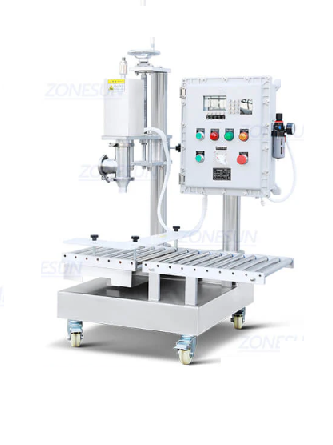
Weigh-filling questions
Questions that define a reliable ATEX weigh-filling station.
Mass measurement is only one part of the result. Tare, platform stability, product cut-off and container disposition must be specified together.
How does container tare variation affect gross-weight and net-weight filling?
Container tare variation affects the result whenever the system uses a fixed assumed tare or when the buyer evaluates gross weight instead of the actual product mass. A net-weight process normally weighs or confirms the empty container before dosing, whereas a gross-weight target includes the container and therefore relies on controlled tare assumptions.
Define whether each container is tared individually, whether labels, caps or liners are present at the weighing stage, and how out-of-range empty packs are handled. Use real containers from the expected supply range during trials.
When should a weigh filler use fast and slow fill stages?
A fast-and-slow fill profile is considered when high initial flow is useful but the final target needs a controlled approach that accounts for valve response, in-flight product and settling. The changeover point and final cut-off depend on the liquid, head pressure, hose and nozzle arrangement, target quantity and acceptable cycle time.
The profile should be established with the real product or a justified representative medium. A setting that works for a thin liquid may not transfer to a viscous or foaming formulation without retesting.
What can disturb a load-cell reading on an ATEX filling station?
A load-cell reading can be disturbed by mechanical contact, hose pull, vibration, conveyor forces, an unstable container, product movement, air currents, impact or an item resting on the weigh platform. These effects can delay settling or bias the result even when the load cell itself is correctly selected.
The layout should isolate the weighing system from avoidable forces and define when the reading is accepted. FAT and SAT should check the platform with the intended hoses, nozzle movement, containers and nearby equipment operating in representative modes.
How should underfilled, overfilled and rejected containers be handled?
The project should define detection, status, physical disposition and authorised recovery for every container that does not meet the agreed acceptance rule. An alarm alone is not enough if the container can re-enter the good-product flow, remain open, leak during movement or be reworked without traceability.
State whether the pack is stopped at the station, diverted, manually removed or held for investigation; who can clear the condition; and whether a corrected fill is permitted. The handling method must remain compatible with the hazardous-area and spill-control arrangements.